It turns out that a few of our members had personal or family experience of the Medicine Hat Victim Assistance & Facility Dog Program; the majority, however, only a general idea of who and what the MHPS Victim Assistance Unit is all about.
Thanks to Program Manager Petra Pfeiffer and Volunteer in the Facility Dog Program Colleen Bosch, as well as Glory the beautiful golden labrador, we left with a much wider, deeper, more accurate understanding of this valuable MHPS program in our community.
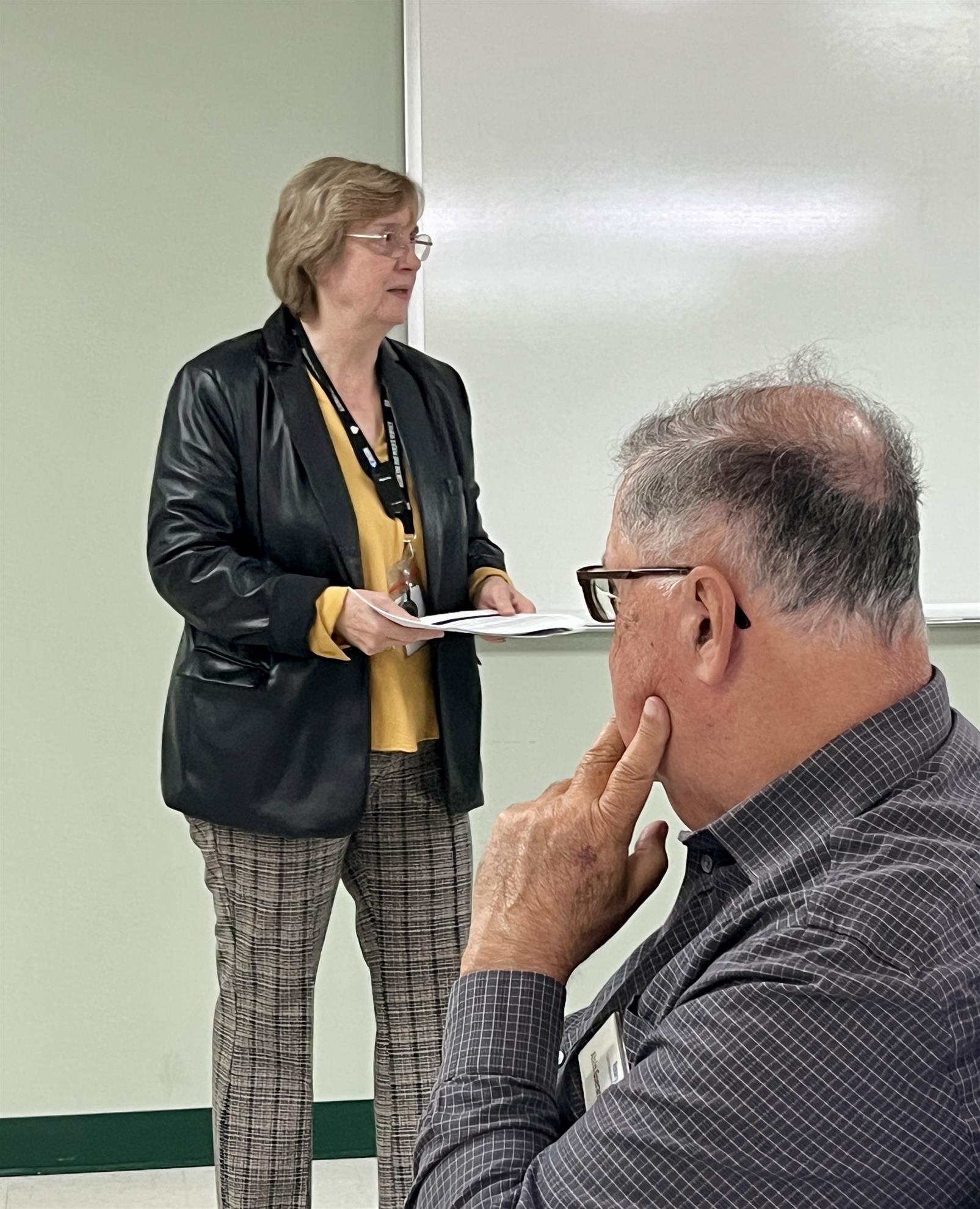
Petra kicked off the presentation, explaining that the unit ensures victims of crime receive professional services in accordance with the Canadian Victim Bill of Rights and the Alberta Victims of Crime and Public Safety Act.
The philosophy of the MHPS VA is to support the well-being of victims of crime and tragedy by providing timely, professional, client-centered and trauma-informed services. They collaborate with other community organizations to minimize personal and system-induced trauma.
Interestingly, the unit team comprises: the program manager (Petra Pfeiffer), navigation specialist, VA support dogs (including Glory), an administrative assistant, victim assistance volunteers (including Colleen Bosch), and practicum students.
The Victim Assistance Unit is funded by the Government of Alberta and the city of Medicine Hat Police Services.
Petra explained the services of the unit, which include:
Crisis assistance upon request of MHPS
Providing referrals
Providing court updates at key times in the court process
Providing court orientation and direct courtroom support
All interactions with clients are documented on the VCM Data Management Program
Colleen Bosch gets immense satisfaction from volunteering. She is the mother of three grown-up children, and the owner of a finishing carpentry business in Medicine Hat. Being the owner of this business allows her to take time to volunteer in the Facility Dog Program, which she has done for four years.
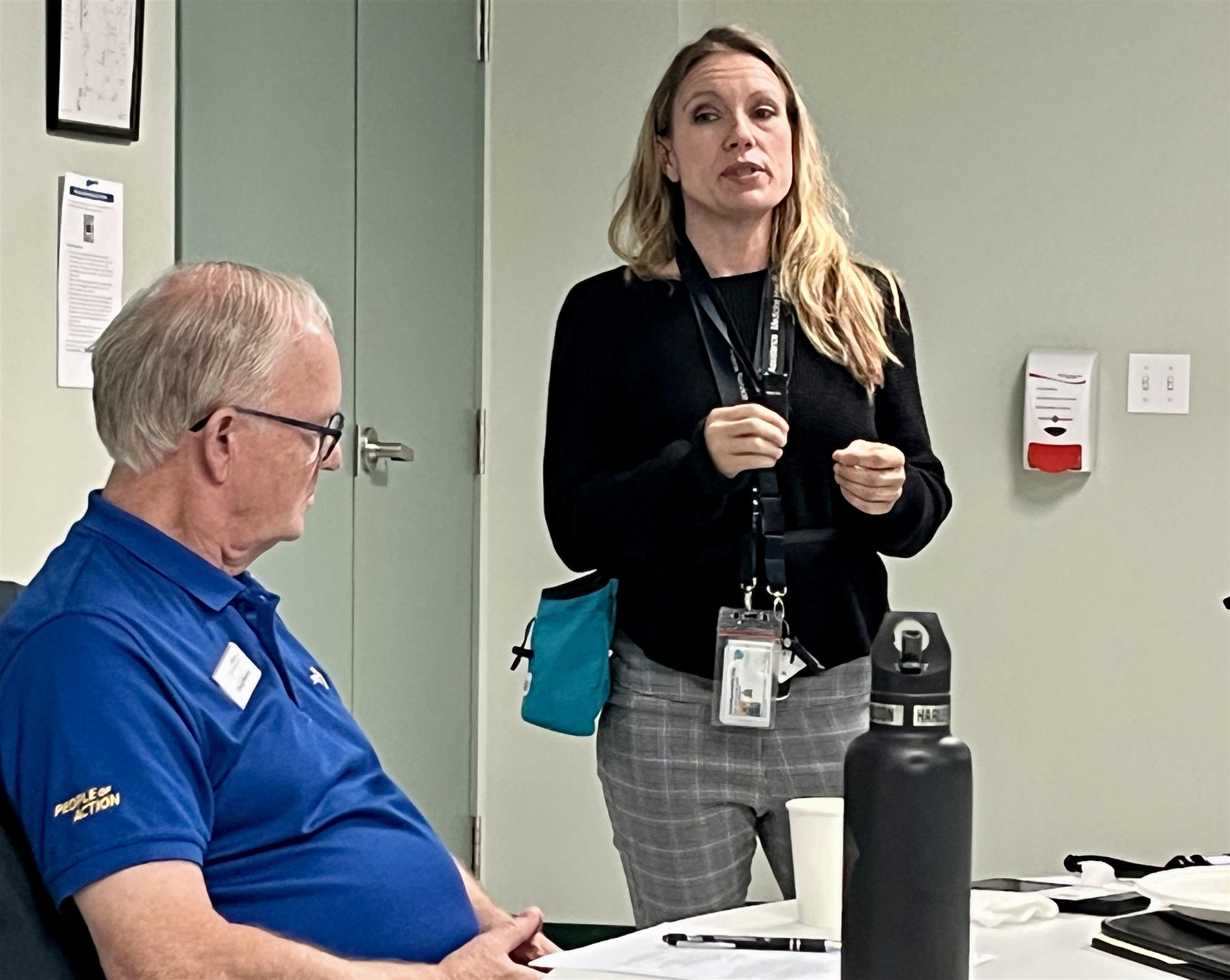
Colleen introduced us to Glory, a 5-year-old cool, calm, and very disciplined golden Labrador, who loves dried pumpkin and never-ending belly rubs! Colleen has been Glory’s second handler for two years now. The first handler of a facility dog is always a police officer, in this instance, Jason Dola.
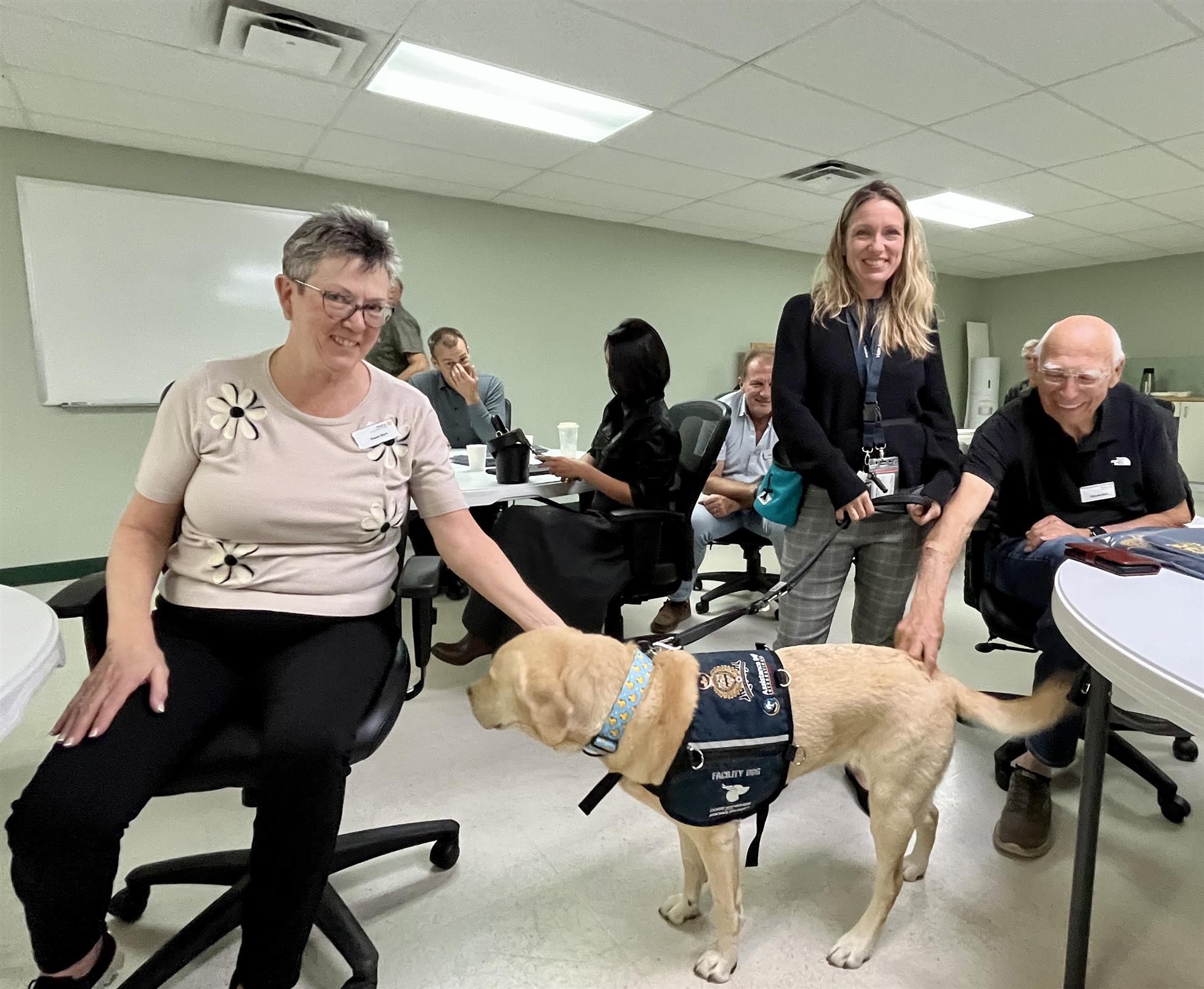
Drawing on her own knowledge and experience, and a White Paper written by Kim Gramlich, Colleen sketched the uniqueness of accredited facility dogs. They are purpose-bred from a breeding pool from within assistance dog schools; bred for health, temperament, behaviour and trainability.
Facility dogs are trained from birth. At 8 weeks they are placed with trained volunteers. These ‘puppy raisers’ have the dog with them for approximately 1-1.5 years.
At 1.5 to 2 years of age, the dogs begin full-time training with professional assistance dog trainers. Professional trainers are responsible for all the advanced skills the dogs will learn, as well as the assessment/testing of the dogs.
Although Facility Dogs do not have legal public access like service dogs, they are generally granted courtesy access when working.
Interestingly, only about 50-60% of assistance dogs in training, graduate. Also, accredited Facility Dogs are insured for activities associated to their professional duties.
It was delightful to see the very special bond between Colleen and Glory, and to observe the beautiful Lab demonstrating some of the many requirements of Facility dogs, namely having low energy, a calm and stable temperament, and exceptional obedience.
What a privilege and pleasure meeting Petra, Colleen and Glory! Thank you for being our guest speakers and for giving us insight into aspects of the workings of the Victim Assistance Unit of the Medicine Hat Police Service. We value the work that you do, offering a great and much-needed service to victims of crime. Thank you!