The focus of our meeting on Monday 16 June was on Humanitarian Aid.
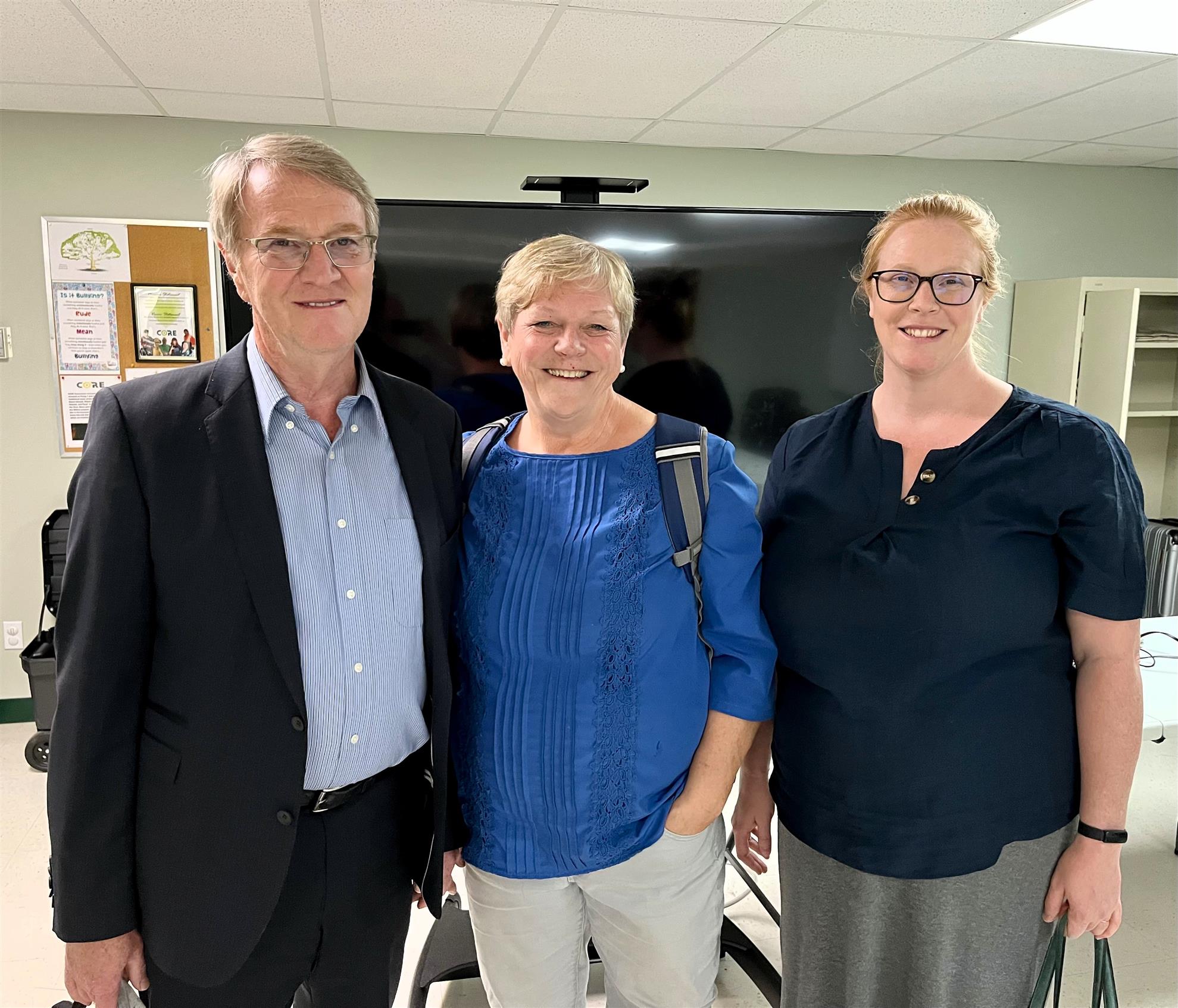
Rotarian Dick Northcott introduced his wife, Deborah Northcott, and daughter, Rachel Austin, who made a presentation on global poverty, global humanitarian aid and the organization that they lead, Real HUMANITARIAN, with facts and figures that astounded members.
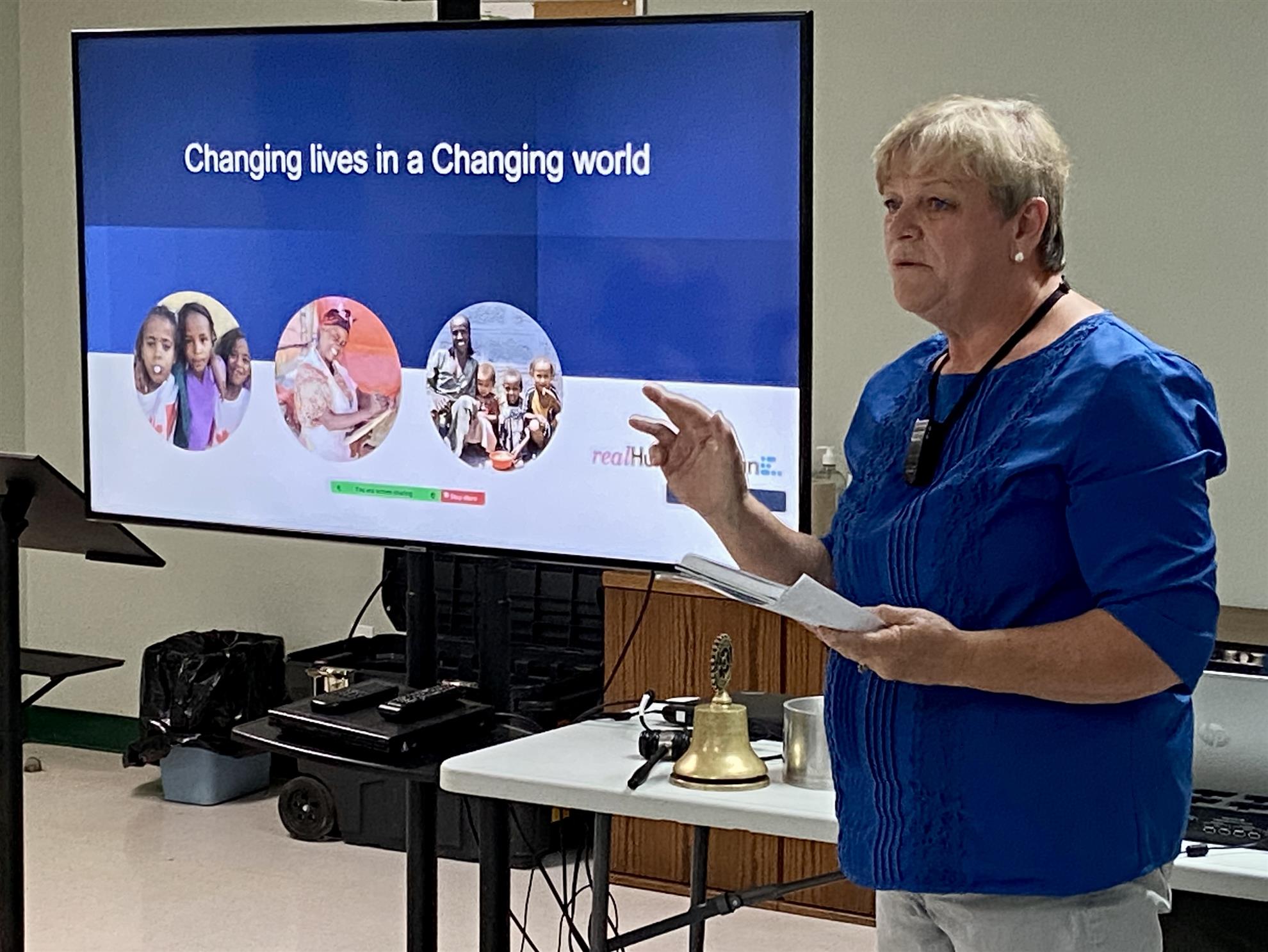
Deborah set out how global poverty has changed in the 15 years between 2010 and 2024. Although fewer than in 2010, there are currently approximately 692 million people living below the poverty line. Sub-Saharan Africa is the poorest region in the world, with 464.18 million people living in poverty, followed by South Asia with 148.68 million.
The budget of the US Agency for International Development totalled USD71.9 billion in 2024 with funds allocated in the following categories: Economic development (27.0%), Humanitarian assistance (21.7%), Health (22.3%), Peace and security (14.2%), Multi-sector (4%), Program support (3.5%), Democracy, human rights and governance (3.2%), Education and social services (2.0%) and the Environment (1.9%). This USD71.9 billion amounts to 73% of global humanitarian aid money from all countries and sources.
The Trump administration’s axing of US Aid has had devastating consequences. An example from the education sector: 396 Education Programs in 58 countries have been cancelled, leading to 85 million children not being in school.
In Ethiopia the impact of funding losses has resulted in the resurgence of HIV, a crisis developing in the maternal and child health sector, the abandonment of sexual assault / violence survivors, and an increase in malnutrition and stunted growth of children.
Deborah reported that only 10% of the annual budget of the United Nations has been secured, due to the changing priorities of donors.
Hisham Allam (@devaid_dialogues) writes:
“Development aid is not charity; it is an investment in global stability and humanity. When we turn our backs on the most vulnerable, we are not just failing them – we are failing ourselves”.
So where to from here?
Deborah spoke about the need to re-think sources of humanitarian aid. It’s not just the US that has pulled the plug on aid. Other countries have also redirected portions of their humanitarian aid budget… to defense/the military.
Private foundations are one source that may need to feature more prominently in light of recent developments in the US and other countries.
Interesting facts about The Bill and Melinda Gates Foundation: this foundation has given over USD100 billion to date and are wanting to give away another $200 billion by 2045, at which point they plan to close the Foundation. They are stepping up the giving process in an attempt to mitigate some of the negative impact of the withdrawal of US Aid funding.
Deborah then went on to talk about real HUMANITARIAN’s humanitarian efforts. As a Co-Founder, she currently serves as Program and Volunteer Director, working with Rachel Austin, Executive Director. Rachel will continue in the ED role with the organization when Dick and Deborah retire.
Real Humanitarian (formerly Canadian Humanitarian) is a non-religious, non-political, registered Canadian Charity (#87302 9102 RR0001). The focus of the organization is on helping disadvantaged children and at-risk youth around the world, together with their families and communities, to reach their highest potential and break the cycle of poverty through the provision of education and empowerment programs.
Since their first beginnings in Canada in 2003, the projects that real Humanitarian supports have continued to grow, as well as the number of children and families that are benefited.
In 2008 they obtained charitable status in the U.S. under the name Kids Hope Ethiopia and began using the name real Humanitarian in the U.S. in 2020 on the 20th anniversary of the establishment of the organization.
Why this name? Because they have real passion, real dedication, real results, and real impact.
In 2012, they obtained their Ethiopian charitable NGO license. In 2014 the organization was licensed in Uganda and Malawi, and in 2025 they were licensed in Ghana.
The modus operandi of real HUMANITARIAN is to build the capacity of government and local people, to harness local resources and to build partnerships.
Deborah shared heartwarming success stories, including one about a young girl in Ethiopia that the organization supported through school and trade training, who then put herself through university, and is now the principal of a school.
Real Humanitarian was the recipient of the Manitoba Council for International Cooperation’s “Development Impact Award” for trade training courses that positively impacted the lives of 160 women.
The presentation ended with Deborah thanking the Rotary Club of Medicine Hat and a number of individual members, for financial support of real HUMANITARIAN over the years.
Deborah shared a quote from Malala Yousafzai as a takeaway:
“One child, one teacher, one book and one pen can change the world”.
We, in turn, thank the Northcotts for the difference that real HUMANITARIAN is making in the lives of children and young people around the world.